Grid network augmentation is what turns a raw measurement into a maintenance decision. Waiting six to eighteen months for network augmentation just to power a new electric vehicle depot is no longer a viable business model for Australian fleet operators.
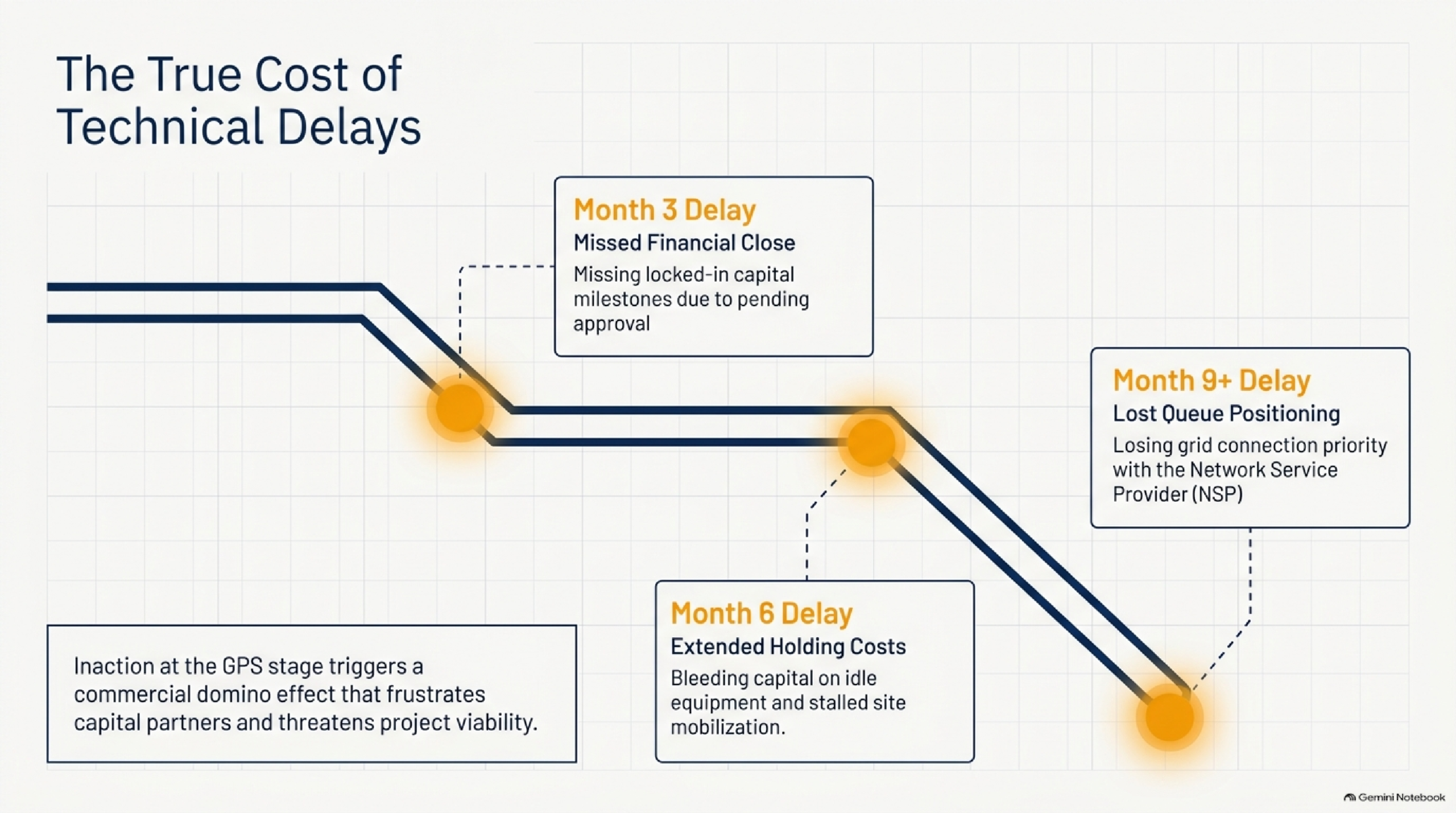
What the problem really costs
When grid connection queues stall your electrification timeline, your corporate net zero targets slip and early mover advantage in green logistics is handed straight to your competitors.
S5 solves this grid bottleneck by deploying fully containerised battery energy storage systems that bypass lengthy DNSP wait times and deliver high power charging capacity on demand.
Our modular systems can be installed, commissioned and operating on site in a matter of weeks rather than years, transforming how depots manage peak energy loads.
Where the grid network augmentation approach differs
By pairing direct battery buffering with smart energy management, you can charge heavy commercial fleets overnight while shaving peak demand charges by up to forty percent.
What changes on site
Your project engineering teams get a plug and play off grid or hybrid solution that scales seamlessly as your fleet size grows from ten vehicles to one hundred.
How many months is your current network provider quoting just to assess your next depot grid connection upgrade?
Getting started
Grid network augmentation is not a technology decision, it is an operating decision. The sites that get value from it pick one or two assets that genuinely matter, instrument them properly, and wire the result into a maintenance routine somebody already owns. Start with the failure that costs the most per hour of downtime and work outward from there.
That sequence — one asset, one measurement, one owner — is what separates a programme that survives its first review from another pilot that quietly stops reporting. The engineering is rarely the hard part; sustaining the routine is.
If you are weighing options, bring the failure mode and the cost of an hour of downtime. Those two numbers are enough to scope a first deployment and to judge whether it earned its place at the next budget review.
Where this fits
Published by S5 System. Related capability: S5 System product range, engineering consulting, mining and resources.
Cross-published from the S5 System LinkedIn stream (2026-10-01). Follow us on LinkedIn for the original post.
Talk to S5 System about your site
S5 System designs and manufactures ultra-low-power industrial IoT sensors for mining,
agriculture, infrastructure and utilities.
Discuss your IoT monitoring project —
book a call.
RotaMon
Wireless, battery-powered vibration, temperature and acoustic condition monitoring for rotating equipment — no cabling, no site infrastructure.
Instrument one critical asset for 90 days and get a defensible condition-monitoring business case you can take to your superintendent. A$4,900, fixed scope, consultancy-led.